

These ten AI-generated works from Alpha Christian Art follow Jesus into the wilderness. Some dwell on the encounter with the tempter, while others give the final moments of care by the angels a scene of their own. Each image links to the corresponding print.
In this guide
- The Gaze upon the Gathered Stones
- The Gaze at the Cave’s Threshold
- The Open Palm before Temptation
- The Tempter below the Blue Mantle
- The Tempter at the Mountain Path
- The Mountain Path after Temptation
- The Angels’ Welcome in Pale Stone
- Consolation in the Hollow of Stones
- The Halt Beneath Sunset Wings
- The Angel at the Shelter’s Threshold
What happens in the wilderness?
In Matthew 4:1–11, Jesus fasts for forty days. The tempter asks him to turn stones into bread, to throw himself down from the Temple, and to bow in return for the kingdoms of the world. Jesus refuses each offer, and angels come to serve him. Luke 4:1–13 places the Temple encounter last. Mark 1:12–13 describes the trial briefly and mentions wild animals and angels.
1. The Gaze upon the Gathered Stones

The stones make the first temptation recognizable. Their ordinary appearance helps convey the force of the offer to someone who has fasted. A landscape format gives the figure and the objects some distance within the same view.
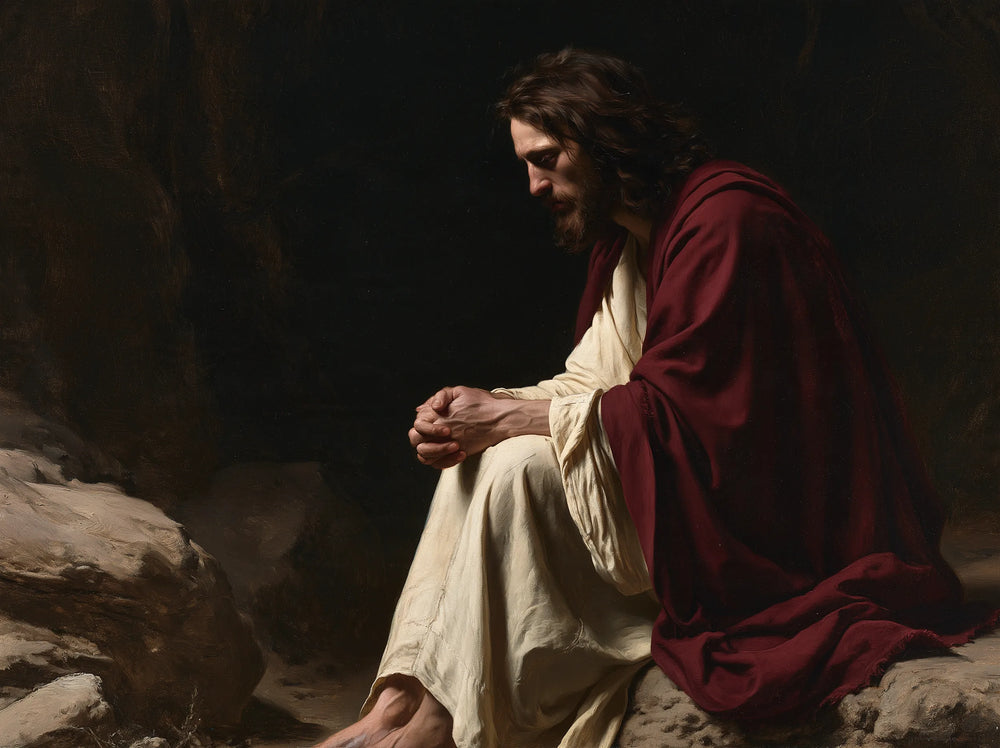
2. The Gaze at the Cave’s Threshold

The threshold brings light and shadow into contact. The darker area gives an impression of shelter, while the opening leads the eye back toward the wilderness. This composition benefits from even light where it is displayed.
3. The Open Palm before Temptation
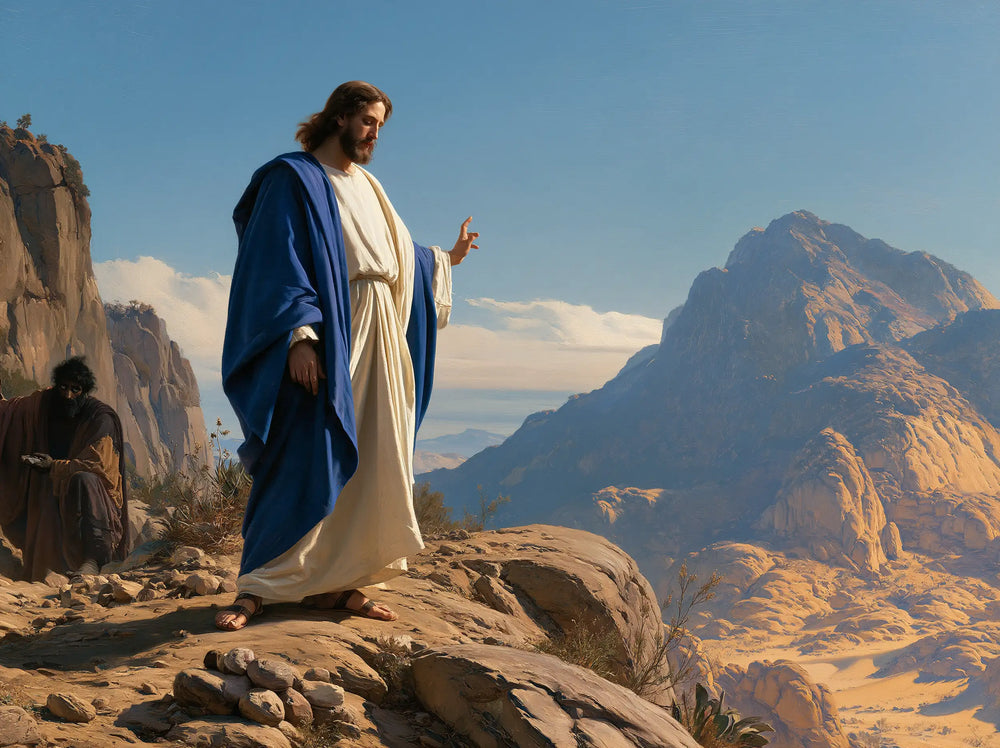
An open hand gives the refusal a visible form. Look from the gesture on the ridge to the figure lower in the scene. The difference in height carries the relationship between them without asking the viewer to infer it from facial expressions alone.
4. The Tempter below the Blue Mantle

The blue mantle draws attention toward Christ at first glance. The lower figure asks the eye to descend among the stones. The composition makes the shift between these two areas part of how you encounter the story.
5. The Tempter at the Mountain Path
The path gives the encounter a location within a longer journey. Follow its direction to see how the terrain leads your eye toward the two figures. A larger print can bring out the separation between the ridge and lower rocks.
6. The Mountain Path after Temptation
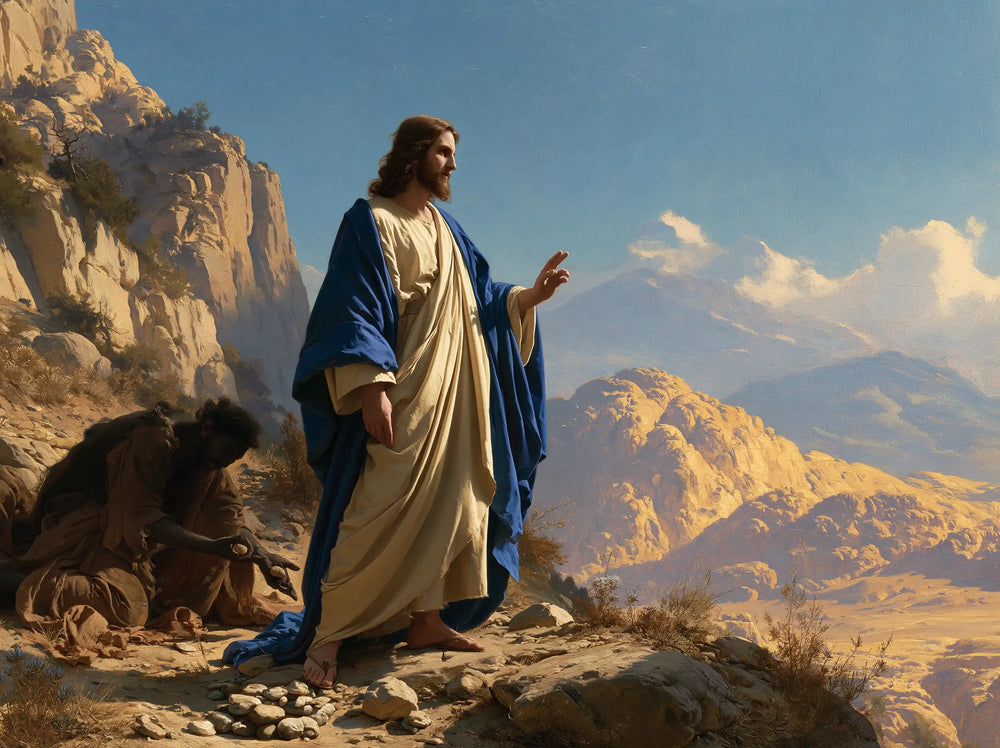
The receding figure shows the encounter coming to an end. Notice how your gaze follows the path instead of stopping on the confrontation. This is a quieter interpretation for a wall where you want room around the figure.
7. The Angels’ Welcome in Pale Stone

Matthew closes the account with angels approaching and serving Jesus. This portrait gives that ending the full frame. Compare it with the mountain scenes to see how the shift from refusal to welcome changes the reading of the image.
8. Consolation in the Hollow of Stones

The landscape format leaves room for the setting around the ministering angels. Start at the figure group, then notice how the larger shapes enclose it. A horizontal wall gives the scene room to retain that sense of shelter.
9. The Halt Beneath Sunset Wings

The title points to the pause after the trials. Look at how the angels and the surrounding light organize the upper part of the image. The vertical format gives those details space while keeping Christ within a close view.
10. The Angel at the Shelter’s Threshold

The threshold makes the movement of the angel the focus of the final scene. Compare it with the cave image earlier in the guide. Both use an edge between inside and outside, yet the figures give that edge a different meaning.
Choose a print by mood and viewing distance
A rocky landscape lets you follow the route and see the distance between the figures. A closer portrait gives greater weight to a gesture or to the presence of the angels. Compare light and dark versions where you intend to display the print. A larger size is useful when the path, distant figure or surrounding rock is important to you.
Explore the companion guide
See 10 historic Temptation of Christ paintings →
For the scene that precedes the wilderness, see our guide to Baptism of Christ paintings.